
Skip to content

Physiotherapy Patient Care

At Total Physiotherapy our goal is to help you maximize your quality of life and assist you in achieving your best possible health. Everyone can benefit from physiotherapy treatment whether you are living with a chronic illness, recovering from a sporting injury or work injury, or suffering from a minor muscle strain.

Total Physiotherapy offers comprehensive assessment and treatment for musculo-skeletal, neurological, and cardio-respiratory conditions.

  • Manual Therapy / Manipulation

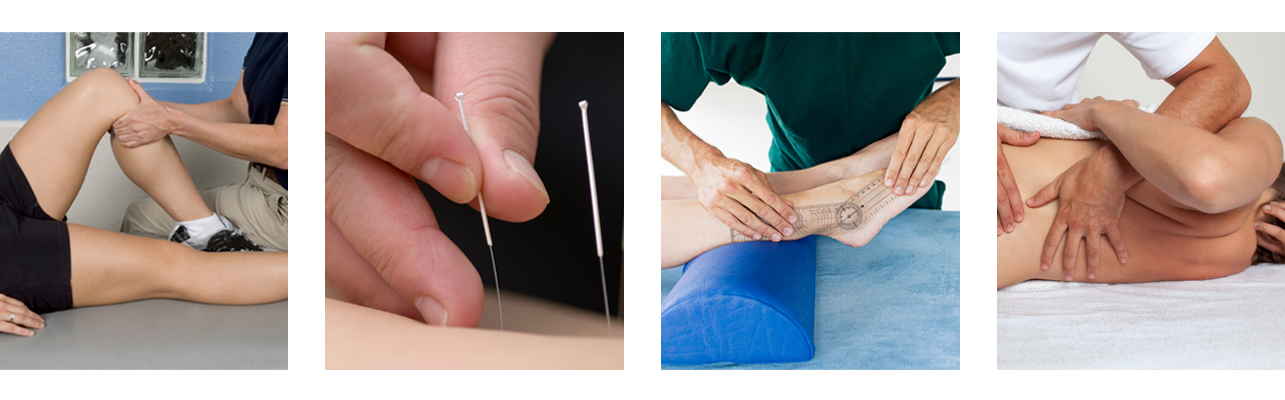
    Our physiotherapists use a wide selection of manual techniques, dependent on the needs of our clients. Manual stretching, friction massage, trigger point, and myofascial release are some of the treatments designed to restore normal length and mobility to soft tissues.

    Manual Therapy involves the physiotherapist’s use of his or her hands to mobilize the joints of the spine and extremities, create movement in nerve tissue or facilitate the activation, flexibility and normal tone of muscle.

    Manipulative therapy is a highly specialised area of physiotherapy, requiring specific post graduate training.

    Myofascial release is a type of massage that stretches the fascia and releases bonds between the fascia in order to relieve pain. The fascia is the thick band of tissue beneath the skin that covers muscles, organs and bones. The connection between muscles and fascia is what is called the myofascia system. The fascia can become tightened or restricted by stress, injury, inflammation and poor posture.

    Joint mobilization techniques are utilized to restore full range of motion in a joint, following loss of mobility. Joint mobilisation is where a joint is moved passively to achieve a therapeutic effect. It is indicated with restriction of motion or pain due to tightness in the muscles, tendons or joints.

  • Mechanical Diagnosis and Treatment (McKenzie)

    Mechanical Diagnosis and Treatment (MDT) is a philosophy of active patient involvement and education developed in New Zealand by Robin McKenzie.

    Most low back pain is "mechanical" in origin, meaning that an applied force caused the pain. A basic philosophy of the McKenzie theory is that the reverse force can abolish the pain and restore function.

    At the first appointment a mechanical examination takes you through a series of movements and positions. Diagnosis is based on the level of pain and limitations that result.

    Once diagnosed a series of individualised exercises are prescribed. The emphasis is on active patient involvement. The aim is to minimise the number of visits to the physiotherapy clinic.

    Ultimately, most patients can successfully treat themselves when provided the necessary knowledge and tools. For patients with more difficult mechanical problems, our certified McKenzie physiotherapist can provide advanced hands-on techniques until the patient can self administer.

    By learning how to self-treat the current problem, patients gain hands-on knowledge on how to minimize the risk of recurrence and to rapidly deal with recurrence if it occurs. The likelihood of problems persisting can more likely be prevented through self-maintenance.

  • Acupuncture & Dry Needling

    Anatomical acupuncture combines the classical acupuncture practiced in Traditional Chinese Medicine with Western medicine by incorporating an in-depth knowledge of anatomy, physiology and pathophysiology. This additional component allows the physiotherapist to treat medical conditions efficiently and effectively.

    Acupuncture stimulates the body to produce and release its own pain-relieving chemicals called “endorphins”. Endorphins block pain signals at the spine stopping the transmission of messages from the body to the brain. By blocking these signals, the body is able to regain its biochemical balance within its internal regulating system, relieve pain, enhance relaxation, and optimize natural healing abilities.

    Acupuncture is effective in treating both acute and chronic pain disorders by encouraging natural healing; improving mood, energy, and sleep; decreasing pain and inflammation; and improving overall function of the injured area.

  • Hydrotherapy

    What is Hydrotherapy?

    Hydrotherapy is a pool-based, low impact exercise program designed to improve your strength, flexibility, mobility, balance, and weight bearing capacity. Hydrotherapy can be first step of a strengthening program to help improve function, aid in rehabilitation and get you back to your activities of daily living following recovery from a muscle or joint injury.

    At Total Physiotherapy we primarily use motion-based hydrotherapy to support the physiotherapy you have been receiving in our clinic. Your physiotherapist might recommend hydrotherapy once your symptoms have been reduced and you are ready for a strengthening program, or hydrotherapy might be recommended to assist in reducing your symptoms, alongside continued physiotherapy in our clinic.

    Hydrotherapy can also be beneficial to assist with arthritis and related rheumatic complaints, partial paralysis, and can be beneficial to children and adults with cerebral palsy, and other neurological conditions, including muscular dystrophy, multiple sclerosis, and Parkinson's disease.

    Why is Hydrotherapy beneficial?

    If you are recovering from a serious injury or surgery, have chronic pain, limited mobility or you have compromised balance, hydrotherapy is an ideal way to ease into your rehab or fitness program. The warmth of the water allows your muscles to relax and eases the pain in your joints, helping you to exercise. Water supports your weight, which helps to relieve pain and increase the range of movement of your joints. Water can be used to provide resistance to moving your joints. By pushing your arms and legs against the water, you can also improve your muscle strength.

    Who will lead my Hydrotherapy session?

    Your hydrotherapy session will be lead by a kinesiologist or physiotherapist. All our hydrotherapy staff are experienced in fitness and exercise therapies in a pool setting. Your therapist will guide, monitor and progress your exercise program, and will work with you to help you reach the ability to continue in an independent exercise regime.

    Your initial session will include an assessment with your therapist to ensure the hydrotherapy program developed for you best meets your needs. Your initial session may include time in the pool if time permits.

    What if I can’t swim?

    You don’t have to be able to swim to benefit from hydrotherapy. The pool is quite shallow (about chest height), so you can exercise within your depth. There will always be a member of our team with you and if you are nervous your therapist can be in the pool with you. You can also use floats which are available at the pool.

    What else do I need to consider?

    There are certain situations where you may not be able to take part in hydrotherapy.

    You must tell our staff in advance of an appointment if you have any of the following: a wound or skin infection; a virus or stomach upset; raised temperature; high or low blood pressure; breathing difficulties; kidney condition requiring dialysis; angina or heart problems; incontinence; chest infection; a chlorine allergy; uncontrolled diabetes, asthma or epilepsy. You and your physiotherapist will decide whether hydrotherapy is suitable.

  • Gait Analysis

    Gait Analysis is about more than just watching you walk or run.

    Gait Analysis uncovers precisely how your body is moving. It can be used to develop strategies to help you move faster and avoid the injuries caused by biomechanical abnormalities.

  • Custom Foot Orthotics

    Foot biomechanics play a vital role in how the body moves and functions. A custom foot orthotic is a biomechanical insole achieving alignment of the foot and ankle into an anatomically efficient position.

    Your orthotic evaluation will involve a thorough history and biomechanical assessment including a clinical gait analysis.

    A 3-dimensional mold of your foot will be made with plaster and from this your custom-made prescription orthotic will be crafted. The end result is an insole that is unique to your condition, activity level, and to the footwear in which you will use them.

    Our orthotics are fabricated by Paris Orthotics in Vancouver, BC.

  • Strengthening and Functional Rehabilitation

    Exercise therapy is a key component to addressing pain and injury management and involves increasing motion of the body in order to relieve symptoms and improve function. Specific stretching, strengthening, and stabilization exercises are a critical part of the rehabilitation process for most musculoskeletal injuries.

    Continued exercise is an important component of rehabilitation and injury prevention.

  • Individualized Home Exercise Programs

    Prescriptive exercise is highly effective and a key component of injury prevention, recovery, pain management, and general good health.

    We can provide you with exercises specifically designed for your needs. Exercise programs can be emailed to you and accessed by you online with your personal login code.

  • Athletic Taping and Bracing

    Taping and bracing injured joints and body parts protects those areas from further re-injury and allows for an earlier return to activity.

    Taping can also give support to an area, which will allow muscles, which have tightened or sprained to relax and facilitate an earlier return of full range of motion.